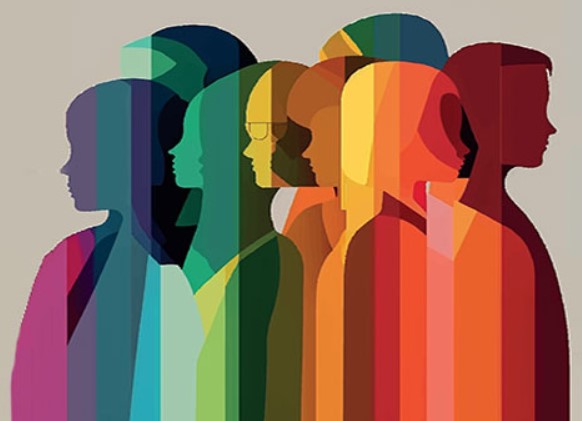
For this blog post (Week 4's assignment), we are required to comment on Stephen D Brookfield's The Skillful Teacher Ch. 8 - Teaching in Diverse Classrooms
Out of all the chapters I have read so far in this book, I found this chapter the most light on applicable information. Perhaps it's because I'm already intimately familiar with a lot of DEI concepts from previous learning, and I am actively seeking out information on how to make my training programs inclusive.
The author suggests first about understanding the diversity of learners. I came across a book the other day that I was skeptical reading, and found myself suspicious of the bias/intentions/background of the author. In it, however, the author fully admitted his own personal bias:
He continued to indicate:
I found this prefacing interesting, in that I felt more inclined to consider his point of view, if only from his specific lens. With that noted, I did my own introspection to discover my own bias and experiences so that I am clear on what I may be inadvertently bringing into the classroom with me. Here's my kick at the can:
I am a "white" blonde cis neurodiverse woman with a middle class upbringing with children and pets. I am a homeowner and live/play/work on unceded Stó:lō lands. I have lived experience with poverty, ostracization, and discrimination in areas that should have been protected human rights here in Canada. I am aware that I walk with privilege that is sometimes invisible to me, and I experience discrimination in ways that are sometimes invisible to others.
Continuing with Chapter 8's content, the author suggests trying the following (and then follows up with the fact that we will always fall short):
• Gauging diversity
• Team teaching
• Mixing student groups
• Mixing modalities
• Visual or Oral Communication
• Silent or Speech Filled Classrooms
The first point, may or may not be visible, and students may or may not feel comfortable disclosing their diversity. I know for a fact I do not openly disclose my diversity unless I feel it can help someone else, and I know for a fact that I am discriminated against just on what I look like, so I can 100% understand someone now feeling safe to disclose their diversity. I also am not a fan of labels, especially with neurodiversity, as there is a wide spectrum where people may land on this spectrum. The best I can do is ask for how this information is hitting the students, and keep enough variety in modalities that I try to hit as many students in as many ways as possible and let them give me feedback.
Team teaching is interesting to me, as it aligns with what I have been learning about with Indigenous Ways of Learning and Knowing, and the First People's Principles of Knowing (FNESC, 2006), in that learning isn't always top down from an instructor, but more holistically including other members in the community/village. This would include peer learning, mentor/Elder learning, instructor learning, and learning from the youth. I always like to have people from different walks of life come in to talk to our classes so that perhaps my learners can find a connection with someone that resonates with them.
Mixing student groups and modalities are things that I try to do on a regular basis. Sometimes groups don't work well together, and sometimes learning gets stunted if students aren't stretching outside their comfort zones. Different modalities are crucial to me in that I know I don't learn well from certain modalities, whereas I know others have great success. I try to include more imagery in my work, and colours, but I also make it easy for those using screen readers and who experience colour-blindness so that they are not missing out on learning opportunities. I try to include voice overs, and videos, as well as text for those who hate movies (like me), and I like to give resources for people to learn more about the subject matter. This all ties into the authors' suggestion of "visual or oral communication point" as well. It all intermingles and that blend makes for interesting and inclusive learning opportunities.
The last point of the author of silent or speech filled classrooms was interesting to me, in that he had the classroom do a silent whole class debrief in writing instead of in speech. That was an interesting approach. I wish the author had more information in this section on how to do more of these sorts of activities, as this would be interesting. In my current class, I have implemented a red card/green card so that students can put up their cards and "vote" on things, or ask for help without using their words. I also get them to come up and write things on the board as a class, and I have students write one thing they learned on a post-it at the end of the class so we can anonymously hear about what they have learned about (and to use as a collective exam prep at the end of the program) I live with introverted people and classroom participation with extroverts is hard for them, so I try to think of ways that would still be inclusive for them without being as stressful. I find that when I'm up at the front of the class I'm afraid of the silence, but I'm also afraid of hecklers. I like students to be working and engaged, and sometimes that's quiet. I like to put music on while people are working so that the silence isn't too deafening. I have no idea if the class even likes music on, but it seems to break the ice and ease my need for noise! I know that I like noise - I am noisy, and I grew up in a noisy house!
References
Brookfield, S (2015) The Skillful Teacher: On Technique, Trust and Responsiveness in the Classroom. Jossey-Bass.
Ward. T. (2022). Empty Cauldrons: Navigating Depression Through Magic and Ritual. Llewellyn.
First Nations Education Steering Committee (2006), First Peoples Principles of Learning. https://www.fnesc.ca/first-peoples-principles-of-learning/
© 2024. This work is licensed under a CC BY 4.0 license