Problem and Client Goals
Problem: Due to COVID-19, in-person workshops were restricted and home-based craft demand was rising. The client needed a course that could be done online and eventually in person when restrictions were lifted.
Goals: Easy-to-follow instructions, not high-tech, interactive, using some form of online learning system. Must be full of images and details on how exactly to do the process so participants can follow along at home. Non-punishing for participants if they don't get the process correct online prior to doing the hands-on work. Course needs to include a participant kit so that crafters can continue replicating the work done in the course on their own. Participant kit would need to be able to be printed as well as available digitally as the process is wet and materials are anticipated to be damaged. Course also need to have a detailed lesson plan for when the course is done in person again, as well as a materials list to make teaching this course in person easy again.
Consultation
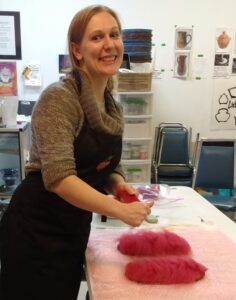
To learn the process and to capture the images needed for this program, I personally attended a workshop, led by the subject matter experts, and created the wet felted wool slippers myself. The majority of the images used throughout this program and the slippers produced are from this session (photographic proof of this included)
They wanted the images to be cartoon and photo-realistic to make the material content less daunting as well as detailed enough to follow at home.
A video link with a similar process was discussed for the e-learning module, but wouldn't be shown in-person. It was decided that having a computer near the process would end up in it being damaged, which is highly undesirable!
Content Mapping
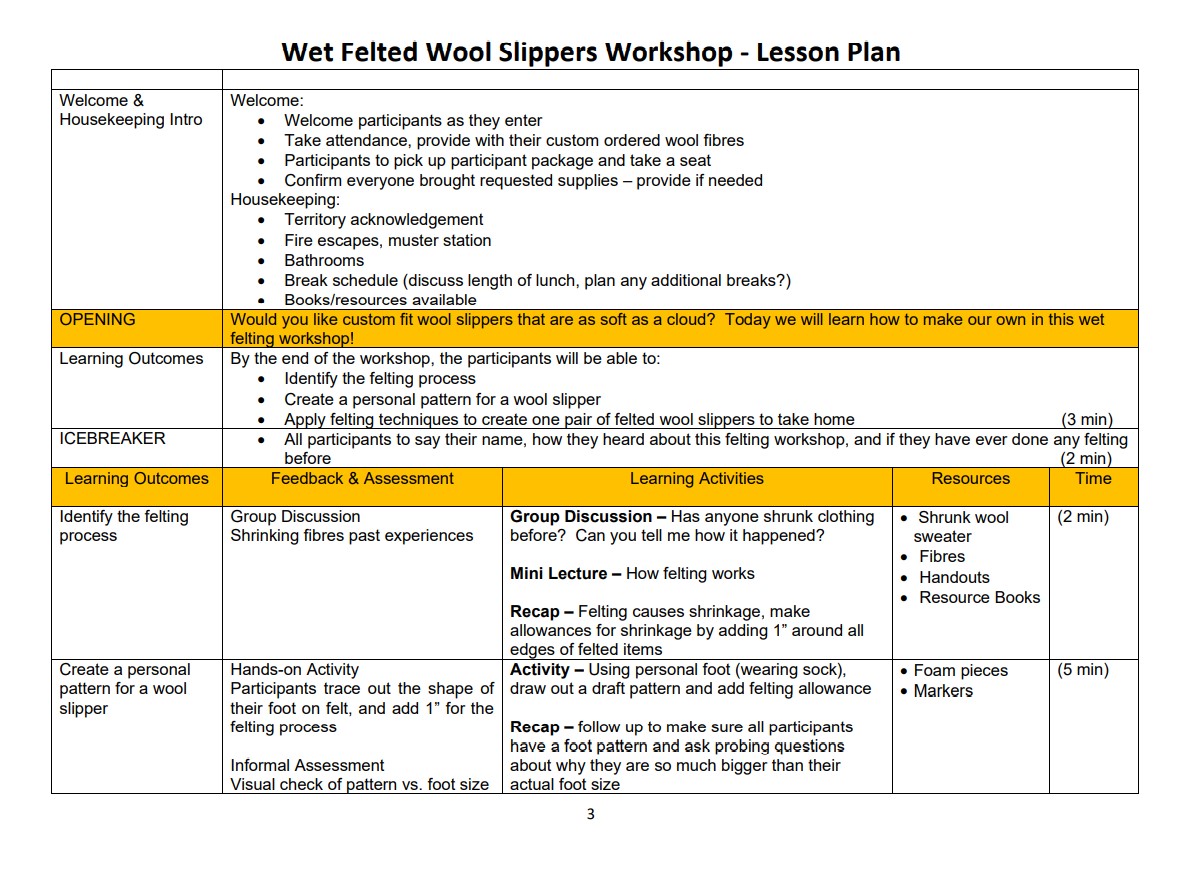
As the client had requested a lesson plan and a detailed materials list, we created a formal lesson plan for a facilitator to use for an in-person workshop. This included all the materials and advance planning required, as well as the day-of steps to teach the class. We made it as detailed as possible so that nothing could be forgotten, especially if the facilitator was travelling to different sites to run the course. It included things such as lunch and gas!
The client went through the lesson plan and gave feedback on the content, as well as added additional information that may have been missed in the training session.
As the client's favourite colour was orange, we used orange throughout the entire process to give it that personal touch. This includes the colour highlights in the lesson plan, the participant guide and in the online course itself.
Prototyping
A user-friendly platform was important to the client, and didn't necessarily need to use a Learning Management System at this time to "grade" the participants. They did want the ability to add to an LMS at a later date.
The platform chosen was Articulate for this particular project as it was very user friendly and could be hosted both on the company website but also on an LMS later if desired. This platform also has a lot of built-in interactivity.
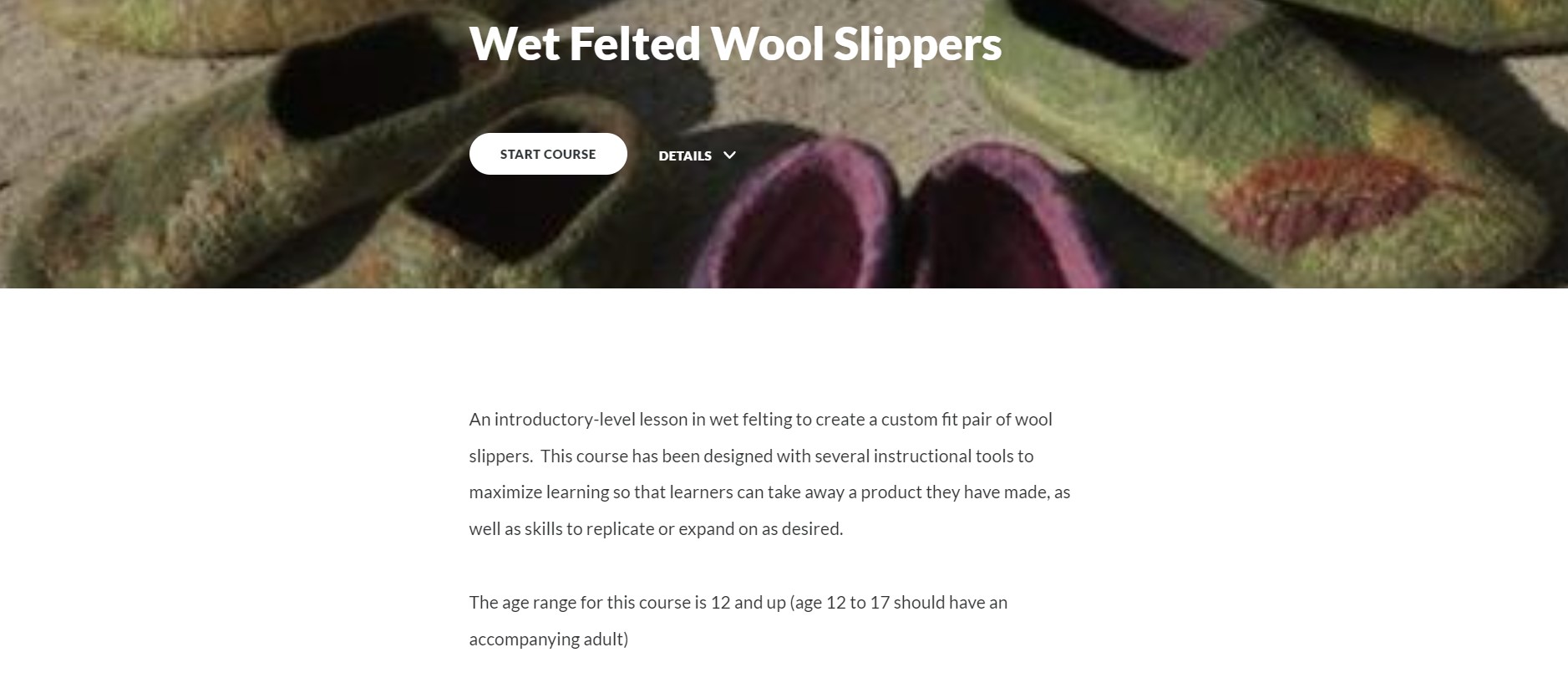
A working prototype was created for the client to walk through the program as well as a draft for the participant package. The participant package was created using Canva and Adobe Photoshop, which is shown below in the Job Aids section.
Job Aids
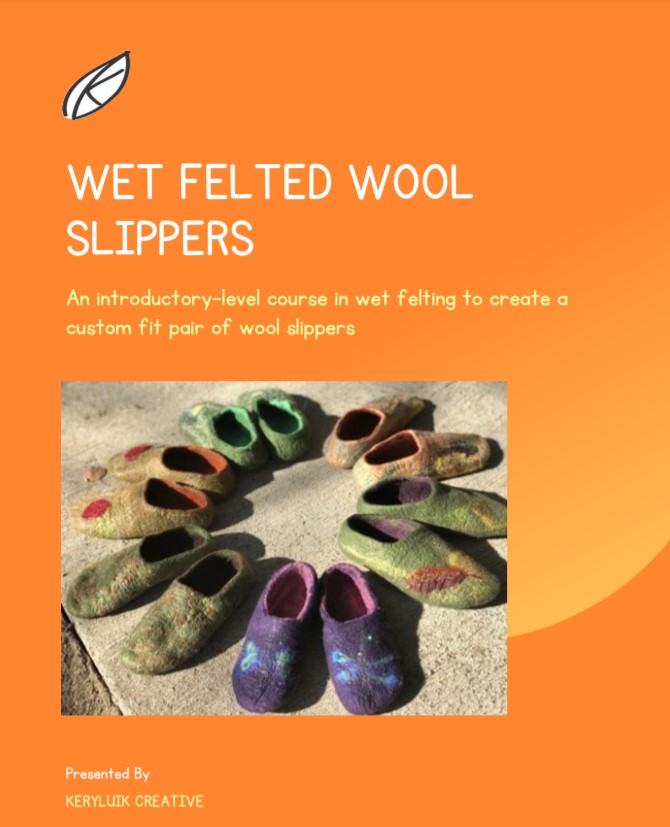
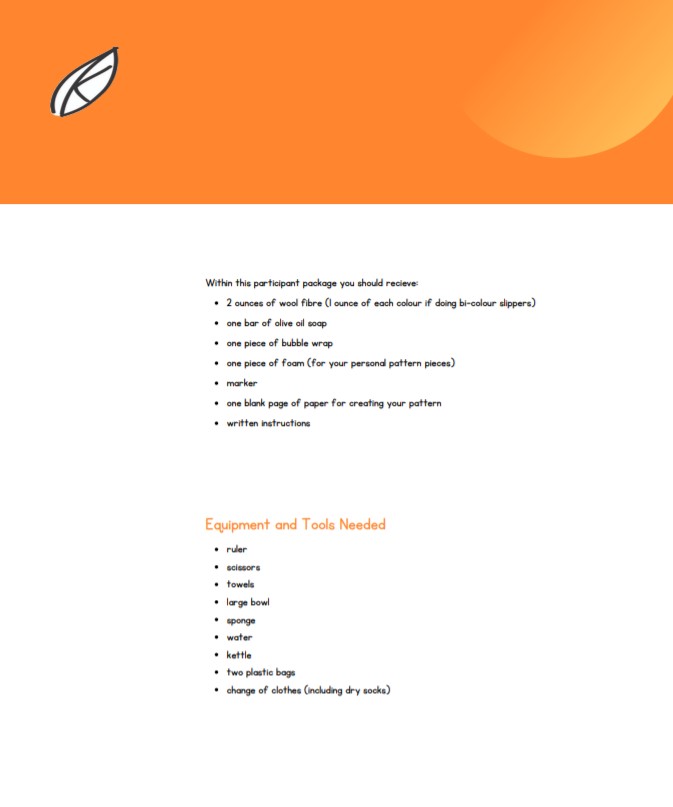
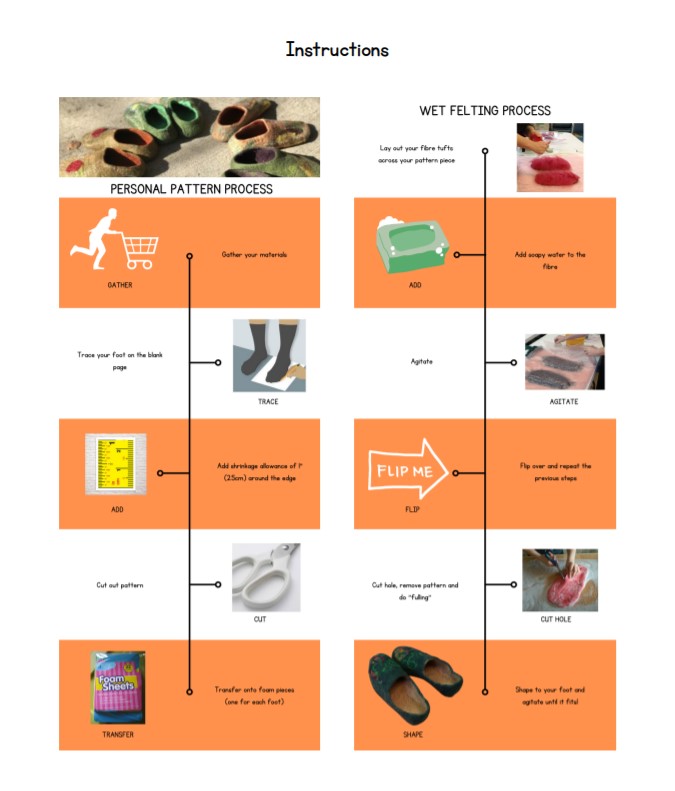
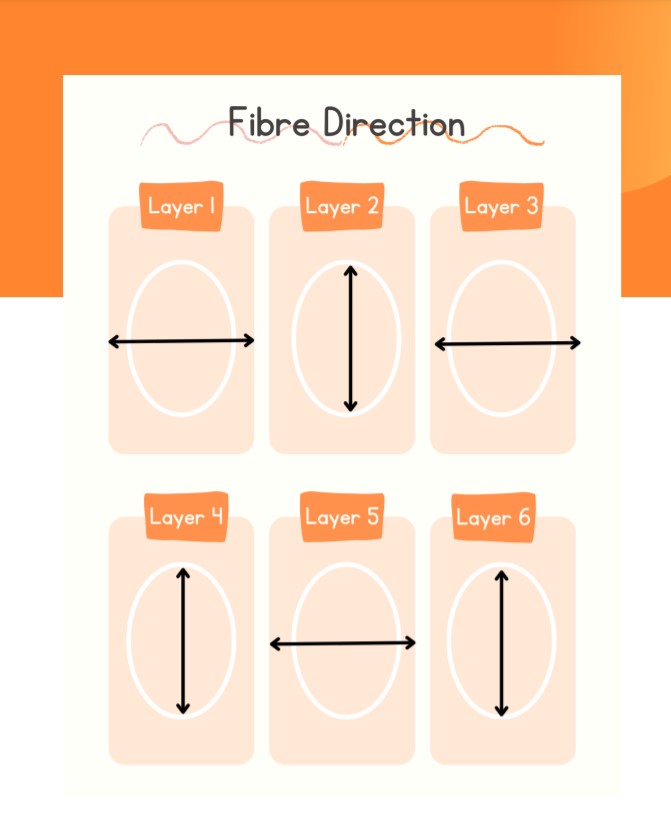
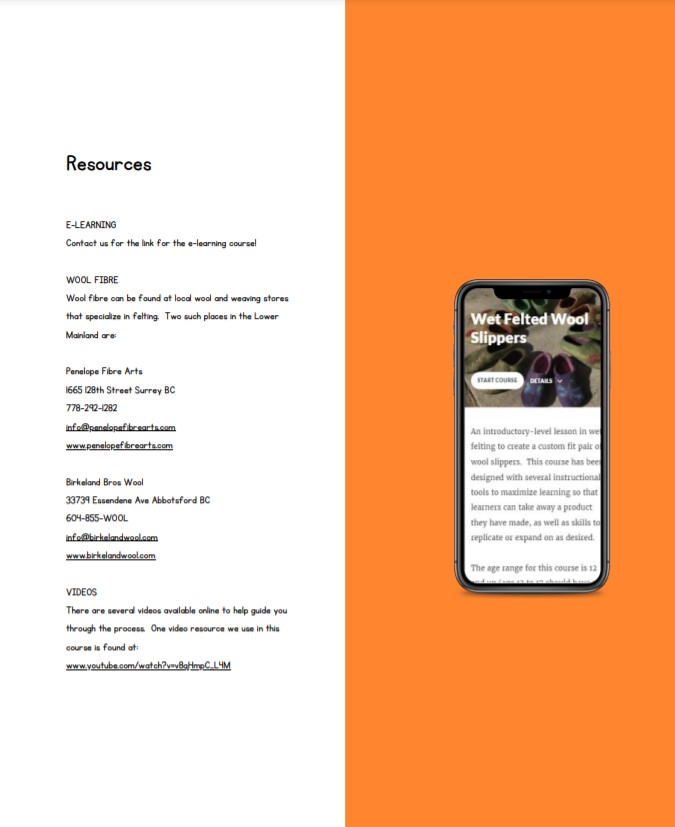
A participant guide was created (in orange, of course) that included materials, infographic-style instructions, fibre direction hints, resources and local material stockists, as well as the link for the video used within the e-learning course. It also included contact information and a call to action to send images of the finished products created during the course.
The participant guide was anticipated to be included with their course materials (picked up by in-person workshop attendees or mailed to distance learners), as well as imbedded into the e-learning course so the participant could reprint as necessary.